
Leonardo da Vinci – vida y obras
Nosotros, por nuestras artes podemos ser llamados los nietos de Dios
Leonardo da Vinci
Un repaso a todas las leyendas y misterios sobre el famoso pintor renacentista. Su biografía y catálogo completo. La vida y obra de Leonardo da Vinci, centrándose en sus pinturas, y debatiendo las atribuciones.
Publicado en abril de 2006. Revisado en abril de 2020. Textos: G. Fernández – theartwolf.com
No hay artista más legendario que Leonardo da Vinci. En toda la historia del Arte, ningún otro nombre ha generado más debates, más discusiones y más horas de estudio que el genio nacido en Vinci en 1452. Pintor, escultor, arquitecto, científico e investigador, la figura de Leonardo ha generado multitud de leyendas, mitos, rumores sobre su homosexualidad, sobre su pertenencia o no a infinidad de logias o sectas, las extrañas historias sobre su estancia en el estudio de Verrocchio, o su al parecer extraña relación con varias de sus modelos -derivado al parecer de su ya comentada presunta homosexualidad- forman la larga lista de mitología leonardesca de la que éxitos como «El código da Vinci» o la serie de televisión «Leonardo» son solo ejemplos recientes.
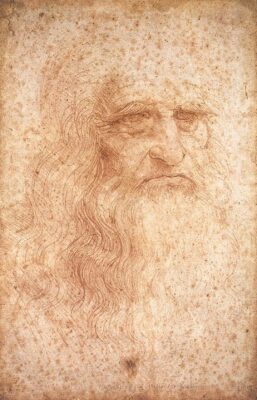
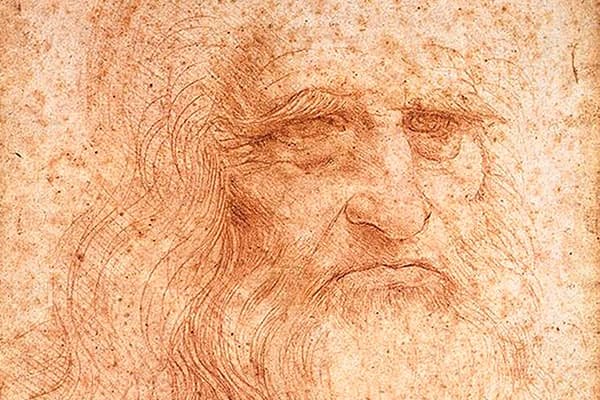
Imagen: Leonardo da Vinci: «Autorretrato», 1516. Tiza roja, 33 × 21,6 cm. Biblioteca Real, Turín
Breve biografía de Leonardo
Leonardo di ser Piero da Vinci nación en 1452 cerca de Vinci, en la Toscana. Siendo todavía joven, se trasladó con su familia a Florencia, y entró a trabajar en el estudio de Andrea del Verrocchio. Verrocchio, uno de los artistas más respetados de su época, recurría a menudo a sus estudiantes para que le ayudasen a completar sus pinturas, por lo que es casi seguro que los primeros testimonios de Leonardo como pintor daten de esta época. De hecho, «El Bautismo de Cristo» (pintado hacia 1472 y 1475 y conservado en la Galería Uffizi) se atribuye generalmente a Verrocchio y Leonardo. De esa misma fecha es «La Anunciación», considerada tradicionalmente la primera pintura de Leonardo.
En 1478, Leonardo recibe su primer encargo de importancia, un fresco para el Palazzo Vecchio de Florencia. La obra, «Adoración de los Magos», es una obra ambiciosa que Leonardo, por motivos todavía no demasiado claros, no llegó a terminar. En esta innovadora pintura, «nada queda de la tradicional Epifanía, y a reyes y pastores sustituyen multitud de manos, de rostros intensamente caracterizados (…) No son magos ni guardianes de rebaños, son las criaturas vivientes, todas las criaturas con la fe y la duda, con las pasiones y las renuncias de la vida, ‘aureoladas’ por la luz creadora de esta obra maestra en la que la luz no tendría lugar» («La obra completa de Leonardo», publicado por Editorial Planeta, 1993)
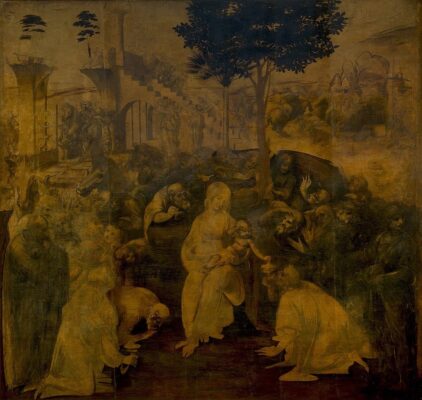
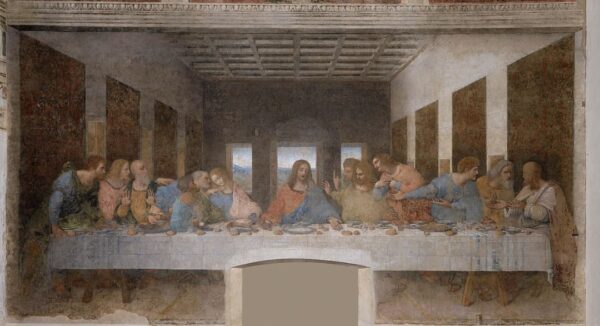
Leonardo da Vinci: «Adoracion de los Magos», c.1478-82. Óleo sobre tabla. Uffizzi, Florencia ·· Leonardo da Vinci: «La última cena», c.1492-98. Fresco sobre pared. Convento de Santa Maria delle Grazie, Milán
En 1482, Leonardo se traslada a Milán, donde realiza dos de sus más famosas pinturas: la primera versión de la «Virgen de las Rocas» (hoy en el Louvre, a la que seguiría una segunda versión, pintada quizás con colaboración de su taller) y, sobre todo, «La Última Cena», pintada entre 1492 y 1497 para el Convento de Santa Maria delle Grazie, quizás la escena religiosa más famosa jamás pintada y la obra más célebre del artista, solo por detrás de la inevitable «Gioconda». La inusual composición permite a Leonardo concentrarse de forma exhaustiva en cada uno de los personajes representados. Así, «cada uno de los personajes (…) expresa una forma diferente de acercarse al modelo descrito en la escena que, también en contra de la costumbre al uso, no es la comunión, sino la verbalización de la traición que uno de los apóstoles está a punto de perpetrar» (Estrella de Diego, «Leonardo da Vinci», 1993)
En 1500 regresa a Florencia, gozando ya de una considerable fama. Dibuja allí su «La Virgen y el Niño con Santa Ana y San Juan Bautista» (conocido hoy como el «Cartón de Burlington House»), una obra que fue admirada por sus contemporáneos, lo que resulta notable teniendo en cuenta que se trata de una obra inacabada. En esta etapa, Leonardo avanza en sus conocimientos como arquitecto e ingeniero, al ser contratado con este fin por Cesare Borgia, hijo del Papa. Pese a esto, su labor como pintor prosigue, y es posible que ya en esta etapa empezase a trabajar en el retrato de la Monna Lisa. En este sentido, recibe el encargo más importante de su vida, y que pudo haber dado lugar al conjunto pictórico más notable de todos los tiempos: los frescos para el Salone dei Cinquecento en el Palazzo Vecchio de Florencia, en el que Leonardo debía pintar «La Batalla de Anghiari», y Miguel Ángel «La Batalla de Cascina». Ninguna de las obras se conserva. Se sabe que Miguel Ángel nunca llegó a realizar la pintura, pero existen dudas sobre el avance que llegó a realizar Leonardo. Hasta la fecha, se han realizado varias búsquedas de este fresco, que podría estar oculto bajo otras pinturas, pero ninguna con éxito.
Hacia 1508, Leonardo vive en Milán, trabajando en el monumento ecuestre de Gian Giacomo Trivulzio. En 1513 regresa a Roma, concentrándose en sus estudios científicos sobre plantas y el cuerpo humano. En 1515 entra al servicio de Francisco I de Francia, quien admiraba a Leonardo y de quien pronto se hace amigo. Se cree que es en Francia donde Leonardo termina su célebre «Mona Lisa». Fallece en 1519, a los 67 años.
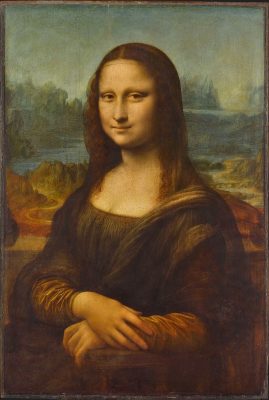
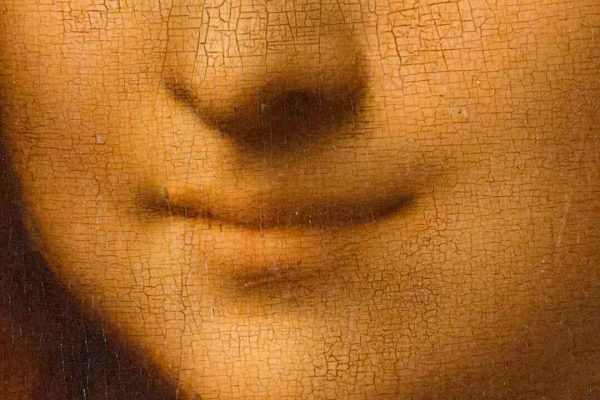
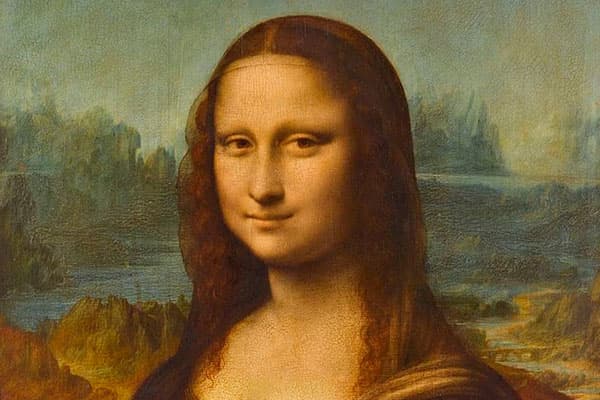
Leonardo da Vinci: «Gioconda» o «Mona Lisa (Monna Lisa), c.1503-19. Óleo sobre tabla. París, Louvre (conjunto y detalle de la sonrisa)
Dejando al margen la mitología barata de los best-sellers , el Leonardo pintor ofrece una fuente continua de debate por una razón muy sencilla: se cree que una gran parte de la obra pictórica del maestro se ha perdido. Esto ha generado que, a lo largo de los últimos 150 años infinidad de críticos, divulgadores, o simplemente cantamañanas ávidos de atención hayan sacado a la luz multitud de pinturas publicitadas como un nuevo Leonardo , apoyados por textos y bocetos que testifican la existencia del original. El supuesto hallazgo de un nuevo original de Leonardo es siempre acompañado de un enorme eco en la prensa y círculos artísticos, y pone el nombre del presunto descubridor en el escaparate del no siempre cauto mundo del Arte.
Sobra decirlo: la inmensa mayoría de estos descubrimientos son simplemente basura carente de cualquier rigor histórico o investigación seria. No obstante, existen algunos debates e investigaciones merecedores de ser comentados, e intentaré mencionarlos aquí.
Leonardo da Vinci: sus obras, sus mitos
La «Madonna dei fusi» – ¿Original o copia?
Uno de los debates más interesantes, y que se ha abordado con más seriedad, de los últimos años sobre la autenticidad o no de una obra considerada del taller de Leonardo es el que estudia las dos supuestas versiones más fidedignas del original -presuntamente perdido- óleo de Leonardo representando a la Madonna dei fusi , es decir, la Virgen de los husos (o Virgen del Aspa). Uno de ellos en la colección del Drumlanrig Castle (Escocia) famosa por haber sido robada (y recuperada) recientemente, y otra, de altísima calidad, de la colección Reford de Montreal, y recientemente adquirida por un coleccionista americano (existen rumores de que el precio superó los 150 millones de dólares, lo cual resulta realmente difícil de creer.) Dejemos al margen la versión Ruprecht de Munich, al tratarse de una tela de muy distinta composición a estas dos.
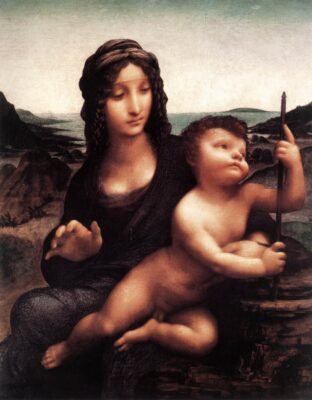
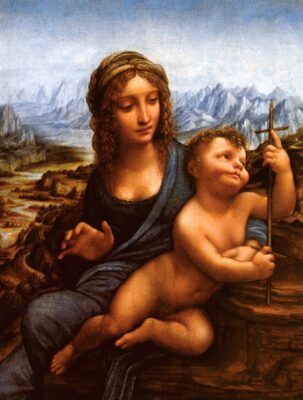
Leonardo da Vinci (con intervención parcial o total de taller): «Vírgen de los husos (Madonna dei Fusi)». Versiones Buccleuch (Escocia) y ex-Reford (colección privada)
¿Qué sabemos de este original? Básicamente tenemos el testimonio de una carta enviada a Isabel d’Este por Pietro de Novellara en 1501, en la que habla de «.una Virgen sentada como para aspar husos y el niño, con el pie un el cestillo de los husos, ha cogido el aspa y mira los cuatro radios que forman la cruz, como deseoso de ellos ríe y no parece quere devolvérsela a la madre, que parece querer usarla.» (1) Este detallado testimonio ha sido utilizado como prueba indiscutible de la no autenticidad de las dos pinturas de las que nos ocupamos, suponiendo que los imitadores abandonaron el simbolismo del aspa y los usos, resaltando la cruz y el sacrificio.
De acuerdo, pero. ¿debemos fiarnos tan ciegamente del testimonio del tal Pietro? ¿Es una fuente ciertamente fidedigna? Sabemos que incluso Vasari, el gran Vasari, comentaba ampliamente obras que no había visto, dando lugar a confusiones históricas que el mundo del Arte ha tardado siglos en resolver. Entonces ¿por qué hemos de suponer a priori la veracidad de ese documento? ¿Por qué el documento escrito ha de prevalecer sobre el documento pictórico? ¿Podríamos invertir este razonamiento y declarar no fiable el testimonio de Novellara a raíz de lo evidenciado en no una, sino hasta tres versiones pictóricas?
No se trata, en principio, de declarar como poco veraz un testimonio, simplemente de ponerlo en duda, lo que nos puede dar pie a un nuevo análisis, más libre, menos condicionado. Además, es incluso posible que este testimonio se refiera a una primera versión de Leonardo sobre este tema, y que el propio maestro pintara, posteriormente (nótese que Suida, ignorando en texto de Novellara, propone 1506 como fecha de ejecución (2)), una nueva versión en la que prescinda de los motivos del aspa y los husos.
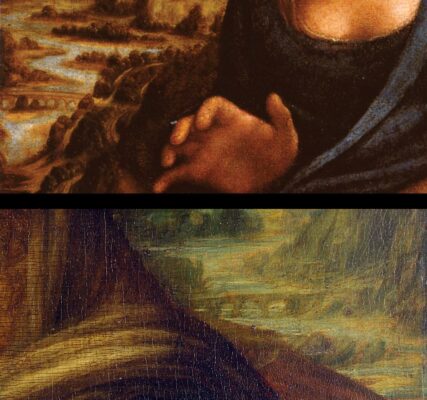
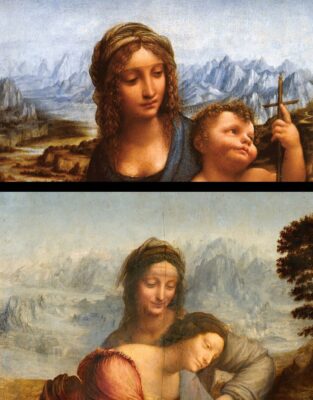
Comparación entre el paisaje montañoso de «Madonna dei Fusi» y «La Virgen, el Niño Jesús y Santa Ana». Comparación entre el Puente de Buriano, representado en la «Gioconda» y en «Madonna dei Fusi»
Si prescindimos de esta premisa escrita. ¿qué tenemos? Dos versiones, casi idénticas en composición, pero con importantes diferencias en el paisaje de fondo, y con una apreciable diferencia de calidad a favor de la tela ahora en Nueva York. Vamos a detenernos, pues, en esta pintura.
No es arriesgado decir que, de todas las supuestas obras de taller de Leonardo, esta es la de más alta calidad. Es una pequeña tela, originalmente una tabla, de pequeñas dimensiones (50,2 x 36,4 cm .) El dibujo, especialmente el rostro de la Madonna , es bellísimo, el fondo es rico y equilibrado, y el color armonioso, con un evidente dominio del sfumetto , aunque es posible que haya sido parcialmente repintada en varias ocasiones. El rostro y la mano de la Madonna nos recuerdan inmediatamente a los de la «Santa Ana, la Virgen y el niño» de la Nacional Gallery , e incluso a los de la segunda versión de La virgen de las rocas , en el mismo museo. Pero es el fondo, tan similar al de la Gioconda (obra inmediatamente posterior a esta) lo más llamativo de la pintura. A este efecto, destacamos un muy interesante estudio llevado a cabo por Marco Versiero a raíz de la exposición de » Madonna dei fusi » en Arezzo, de julio a noviembre del año 2000
¿Podemos demostrar con todo esto la autenticidad sin matices de la versión neoyorkina? En absoluto, pero abre una nueva vía para el debate y la investigación de un periodo en la obra de Leonardo -la primera década del XVI- de la que tan sólo tenemos, como testimonio fiable, la famosísima Gioconda, de la que, por cierto, vamos a comentar algunas curiosidades.
Las mil y un Giocondas
Si hay algo más impactante que publicar la autentificación de un nuevo Leonardo es publicar la autentificación de una nueva versión de El Leonardo, esto es, la Gioconda o Monna Lisa. A lo largo de las décadas, decenas de visionarios que se hacen llamar críticos han sugerido, en muchos casos con bombo y platillo, la existencia de otra Gioconda, ya sea suponiendo una segunda versión o negando la celebérrima del Louvre. Lo cual no deja de resultar ridículo, porque la dama parisina añade a su incontestable e inconfundible calidad una amplia documentación histórica, desde que fue adquirida por Napoleón I e incluso antes, que no dejan lugar a dudas sobre su autenticidad.
Válganos como ejemplo la llamada Monna Lisa de Isleworth (Inglaterra) que fue publicada como auténtica por H. Pulitzer en 1966 en el estudio Where is the Monna Lisa? notando su alta calidad y la presencia de dos columnas en los extremos del lienzo (apenas perfiladas en la tela del Louvre) que supuestamente la catalogarían como auténtica. La obra, de la que no se tiene certeza de su origen hasta su llegada a la colección privada inglesa, no fue aceptada por la crítica. Y es que la Gioconda ha sido copiada infinidad de veces, por lo que la existencia de versiones de calidad ciertamente alta (por ejemplo la de la colección Luchner, o la del Museo de Tours) no debe significar su atribución inmediata a Leonardo.
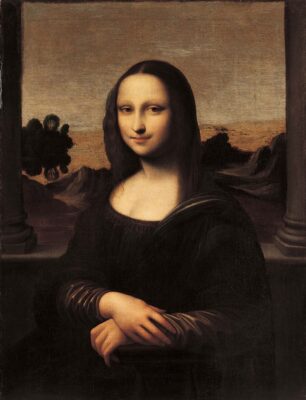
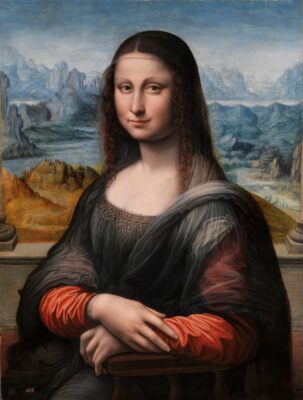
Leonardo da Vinci (seguidores de): Copias de la Gioconda, versiones Isleworth y en el Museo del Prado.
No es el único caso. Incluso un historiador tan respetado como Antonio Manuel Campoy, en su monográfico sobre el Museo del Prado de 1970, no puede evitar sugerir la autenticidad de la versión del Prado con un discurso tan ilusionado como carente de lógica (pese a que esta versión tiene realmente una calidad notable): «Los que hoy mantienen la primacía de la Gioconda del Louvre sobre la del Prado, ¿en qué se basan? Si es en noticias históricas, estas sobran para todos los argumentos que se quieran (?) Si es en la técnica, la verdad es que la Gioconda del Louvre permite en muy limitadísima medida rastrear la mano de Leonardo (??) .» (3) El argumento, constituído por dos piadosas mentiras, sólo puede diculparse si entendemos el amor que Campoy sentía por el Prado, y su evidente deseo de «enriquecer» sus colecciones con una obra del maestro italiano
Y así podríamos seguir hasta el infinito, mencionando mil y un giocondas que mil y un visionarios han intentado colarnos, y llegaríamos a sugerir a modo de broma -o quizás no- que llegará el día que alguien evidencie la mano leonardesca en las Giocondas bigotudas de Dalí y Duchamp. Pero éste, al menos, es un caso cerrado. Sólo hay una Gioconda, y está en Paris, protegida por un grueso vidrio que, por cierto, casi impide su contemplación.
El Catálogo razonado
Debido a los constantes debates sobre la autenticidad o no de las obras de Leonardo da Vinci, el catálogo de obras del maestro permanece en constante fluctuación, añadiéndose nuevas obras que son rechazadas al cabo de unos años, y eliminándose otras que son después readmitidas por ciertos sectores de la crítica. Vamos a comentar aquí las obras universalmente admitidas como auténticas.
1. Obras indiscutibles de Leonardo
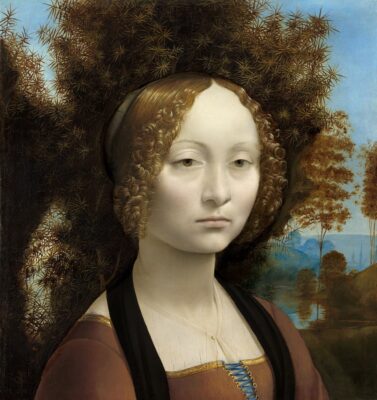
«Retrato de dama (Ginevra Benci)»
1474-76
Washington, Nacional Gallery
Pese a que a finales del XIX y principios del pasado siglo se escucharon algunas voces discordantes (4), en la actualidad nadie duda la paternidad leonardesca de esta pequeña joya, a la que Vasari llama acertadamente «cosa bellísima». Primera obra maestra de Leonardo.
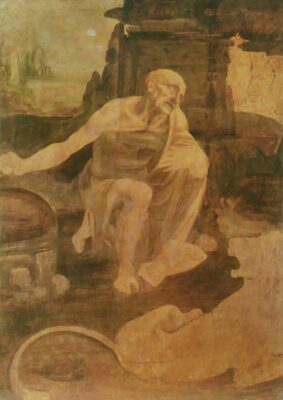
«San Jerónimo»
c.1480
Roma, Pinacoteca Vaticana
Nunca se ha dudado de esta obra inacabada
«La adoración de los magos»
1481-82
Florencia, Uffizi
Igual que en la anterior, nunca se ha puesto en duda.
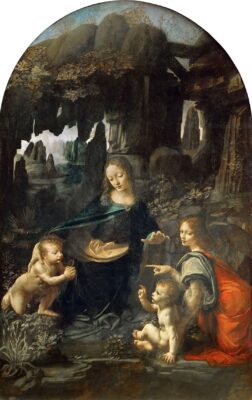
«La Virgen de las rocas»
1483-86.
Paris, Louvre
Indiscutible obra de Leonardo, con abundante documentación.
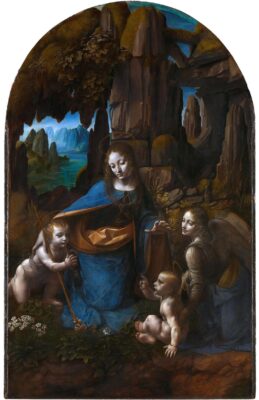
«La Virgen de las rocas»
1503-1506
Londres, National Gallery
La atribución a Leonardo, indiscutida en un principio, fue perdiendo fuerza a finales del siglo pasado, dadas las diferencias estilísticas con la versión del Louvre. No obstante, recientes estudios en profundidad del cuadro han demostrado la paternidad de Leonardo(5). La obra ha sido, probablemente, repintada con poca fortuna, y es incluso posible que las alas del tríptico no sean del maestro, pero la tabla central está fuera de toda duda.
«Cabeza de muchacha (mujer despeinada)»
c.1490
Parma, Galería Nacional
Pocas voces discordantes, entre ellas las de Ricci y Suida (1929) No obstante, la belleza del dibujo y los numerosos documentos históricos la dejan fuera de toda duda.
«La última cena»
1495-97
Milán, Convento de Santa María de las Gracias
Indiscutible, y nunca puesta en duda.
«Santa Ana, la Virgen , el niño y San Juan»
c.1498
Londres, National Gallery
De nuevo una obra nunca discutida.
«Retrato de Isabel d’Este»
c.1500
Paris, Louvre
Obra inacabada y en deficiente estado de conservación, libre, no obstante de toda duda, a excepción de las de Goldscheider (1952), para quien sólo la cabeza es obra del maestro
«Retrato de dama (la Gioconda , la Monna Lisa)» .
1503-05
Paris, Louvre
Obviamente, nunca discutida por ninguna voz autorizada
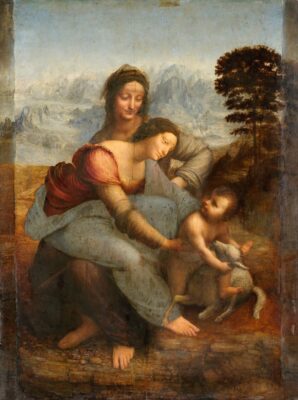
«Santa Ana, la Virgen y el niño con el cordero»
c.1510
Paris, Louvre
Obra magistral jamás discutida, pese a las numerosas copias conocidas.
«San Juan Bautista»
1513-16
Paris, Louvre
Obra excepcional, de una perfección técnica increíble, que nunca ha sido discutida de manera seria, a pesar de que Müller-Walde y Berenson (quien posteriormente cambiaría de opinión) la consideran obra de taller.
En total, apenas una docena de obras, a las que podemos añadir un caso especial:
«El bautismo de Cristo»
c.1472-75
Florencia, Uffizi
Obra de Verrocchio, maestro de Leonardo, parece no existir ninguna duda entre los críticos acerca de la autoría de este último sobre uno de los ángeles y una pequeña porción del paisaje tras el mismo
2. Obras generalmente aceptadas aunque discutidas
«La Anunciación»
c.1472-75
Florencia, Uffizi
Durante mucho tiempo fue considerada la primera obra pictórica de Leonardo. No obstante, en el transcurso del pasado siglo los críticos se dividieron entre aquellos que mantenían la autoría de Leonardo, los que hablaban de una obra en colaboración, tal vez con Lorenzo di Credi, y los que rechazaban cualquier intervención del maestro, optando por Ridolfo Ghirlandaio o incluso Verrocchio. Personalmente rechazo esta última opción, y considero que la hipótesis Leonardo – di Credi no es en absoluto disparatada.
«Virgen que da una granada al niño (Virgen Dreyfuss)»
1472-76
Washington, Nacional Gallery
Atribución dudosa. Cobra fuerza el nombre de Lorenzo di Credi
«Virgen que da una flor al niño (Virgen Benois)»
1475-78
San Petersburgo, Ermitage
Obra de calidad bastante mediocre, discutida desde siempre, y que sorprendentemente es hoy por hoy indiscutible para la mayoría de los críticos (Clark, Berenson, Castelfranco.) Personalmente, no apostaría por su autenticidad.
«La Anunciación»
c.1478
Paris, Louvre
Dudosa, sobre todo cuando se compara con la tabla de los Uffizi, pese a que algunos han querido ver una obra de colaboración.
«Virgen que da un clavel al niño (Virgen del clavel)»
c.1478-80
Munich, Alte Pinakothek
Obra muy debatida, cuya atribución ha fluctuado desde Verrocchio (imposible) hasta la entera mano de Leonardo, cosa que no parece disparatada, dada la alta calidad de la obra y la existencia de numerosas copias de menor calidad.
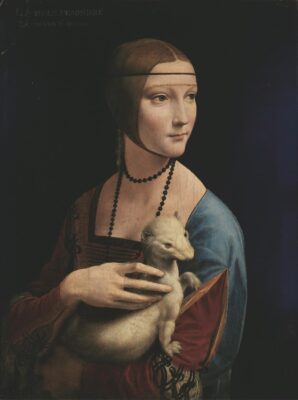
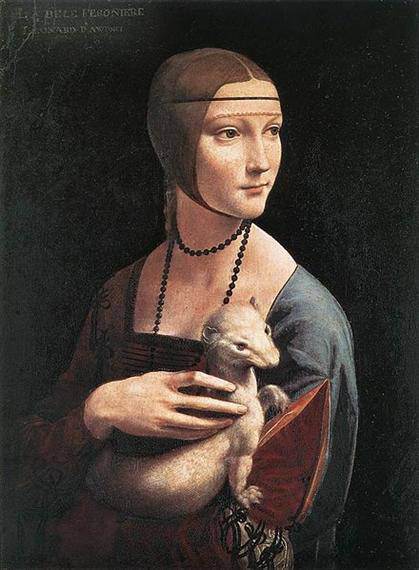
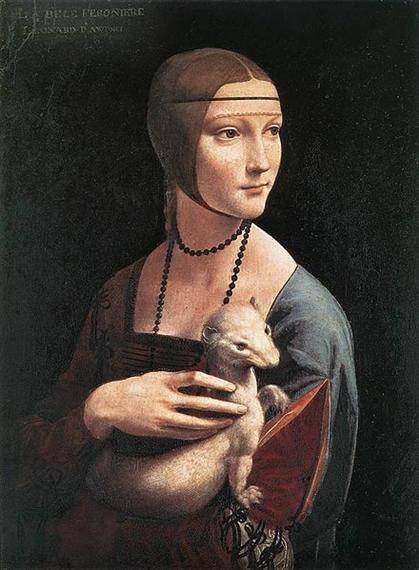
«La dama del armiño (o la dama del hurón, de la marta)»
1485-90
Cracovia, Czartoryski Museum
Es una obra bellísima, misteriosa y profunda, semejante en estilo a » La Belle Ferronnière «, pero incluso de más calidad. Ha sido profunda y lamentablemente repintada, sobre todo en su flanco izquierdo, lo que ha variado su aspecto original y ha dado lugar a numerosas voces que la consideran de taller destacando la de Rosenberg (1898) que la considera indigna del maestro o de su escuela (?) Las dudas sobre la autoría de » La Belle Ferronnière » han arrastrado con ellas a esta pequeña joya, que sigue, por el momento, en la lista de obras auténticas. Personalmente, no tengo dudas sobre su autenticidad.
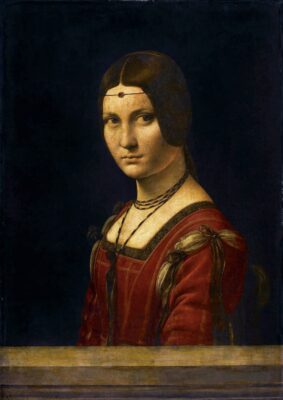
«Retrato de dama ( La Belle Ferronnière)»
c.1490-95
Paris, Louvre
La atribución de esta tabla ha ido casi siempre unida a la de la obra anterior, reflejando sus similitudes estilísticas. No obstante, las voces discordantes son aquí algo mayores. Aún así, probable obra del maestro.
«Virgen amamantando al niño (Madonna Litta)»
c.1490
San Petersburgo, Ermitage
Obra tremendamente repintada, y de estilo ciertamente extraño, sobre todo si se compara con la obra anterior. Muy discutida. Parece más cerca del taller que del maestro
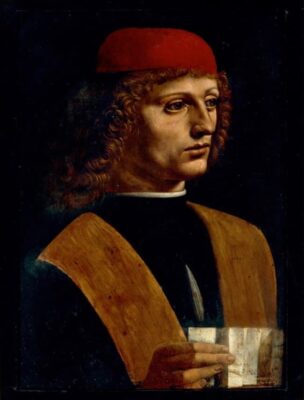
«Retrato de músico (Franchino Gaffurio?)»
c.1490
Milan, Pinacoteca Ambrosiana
Se ha querido ver en este retrato ciertas similitudes con el Ángel de la «Virgen de las Rocas», pero que ha sido rechazada como obra del maestro por varios estudiosos.
«Retrato de mujer (Beatrice d’Este?)»
c.1490
Milan, Pinacoteca Ambrosiana
Similar en estilo y consideraciones a la obra anterior. Muy dudosa
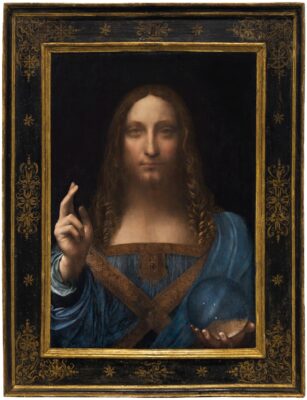
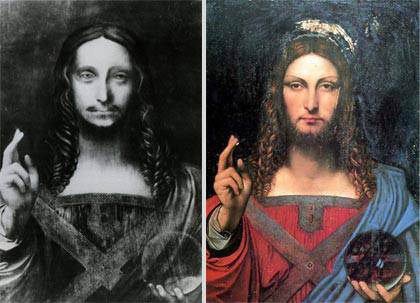
«Salvator Mundi»
c.1500-1510
Colección privada.
Obra enormemente famosa tras su venta en Christie’s por 450 millones de dólares en 2017. Se ha escrito mucho (tanto en theartwolf.com como en libros y catálogos) sobre los debates acerca de su atribución o no, y un análisis en profundidad ocuparía bastante más que la longitud de toda esta página. En resumen, podemos decir que existe mucho interés en presentar esta obra como un Leonardo auténtico, pero gran parte de la crítica especializada no está en absoluto convencida. Dejémosla en «dudosa».
Y eso es todo. En total, apenas 24 pinturas, de las cuales sólo la mitad gozan de atribución indiscutida. Lo cual significa que todavía existe suficiente espacio vacío para nuevas atribuciones. En theArtWolf seguiremos vigilando.
Referencias
1. Carta fechada el 4 de abril de 1501
2 . Suida, «Studi in onore del Verga» , 1931
3 . A .M. Campoy: «El Museo del Prado» Ediciones Giner, 1970
4. Especialmente Waagen (Die Kunstdenkmaler in Wien, 1866), Suida (1903) y Liphart (1912)
5. Incluyendo el reciente hallazgo mediante rayos X de un dibujo desconocido detrás de la pintura.
More about Leonardo
Follow us on: