
Hyeronimus Bosch · The Garden of Delights
c.1500 – 1505 – Oil on oaks panels – Madrid, Prado Museum
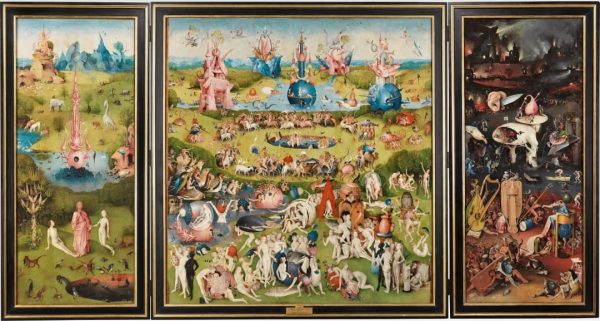
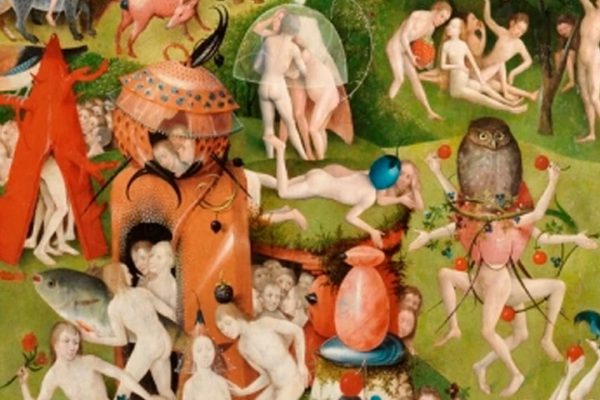
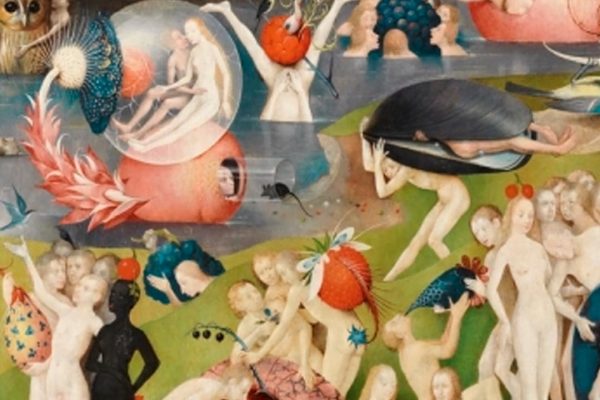
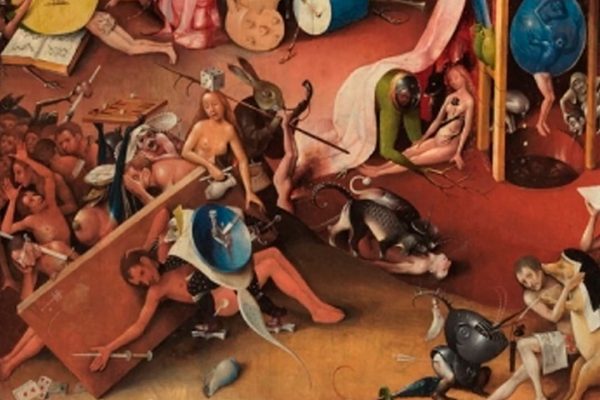
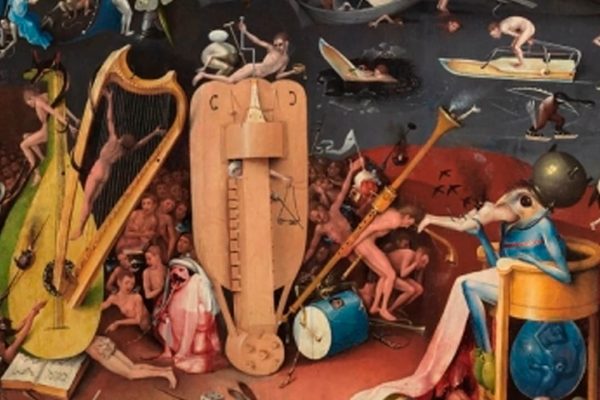

One of the most famous and commented paintings of all Western Art, and also one of the most complex and misinterpreted. An in-depth analysis of the work would occupy pages and pages of interpretations and -in many cases- mere conjectures.
In short, all works by Bosch are basically moralizing, didactic. The artist saw in the society of his time the triumph of sin and depravation, which had caused the fall of humanity from its original state of sinlessness; and he wanted to warn his contemporaries about the terrible consequences of their impure acts.
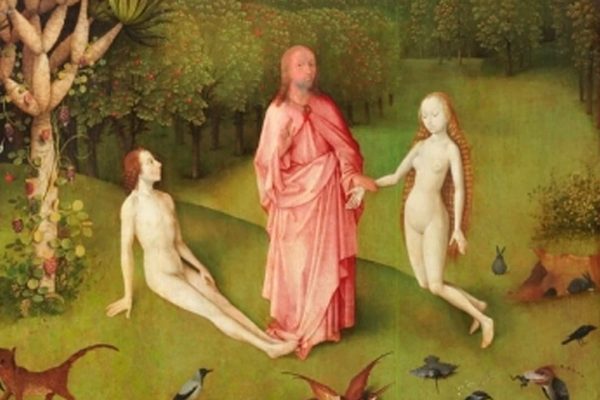
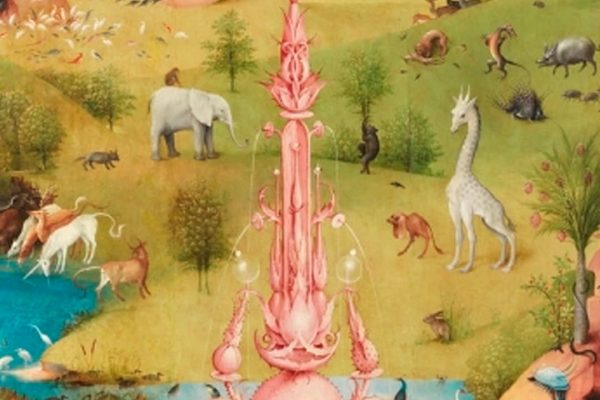
The left panel represents the paradise: Adam and Eve living sinlessness in the middle of a formidable Eden full of fantastic animals and exuberant vegetation, with the Fountain of Life dominating the scene. The right panel represents the horrific torments that the sinners suffer in hell, including being devoured (and later defecated) by a strange figure with a kettle in its head. The scene is sensational for its fantasy and colours, and it is especially remarkable the overwhelming use of the light and shadows in the buildings burning in the upper part of the composition.
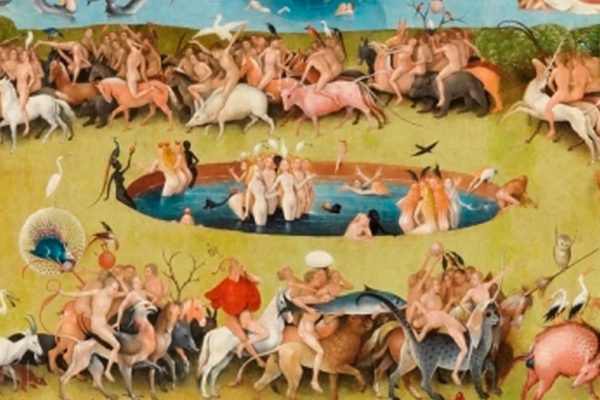
The central panel is extremely complex, as much for its composition as for its meaning. The centre of the scene is occupied by a pool filled with women, with a group of men surrounding it -a scene that have been often interpreted as an allegory of sexual desire. Several references to original sin -women and birds giving apples to men- complete the scene. Although such a moralizing impetus would look quite ridiculous for contemporary viewers, this work by Hieronymus Bosch deserves to be considered as one of the greatest paintings of all time.
Text by G. Fernández, theartwolf.com
Follow us on: