
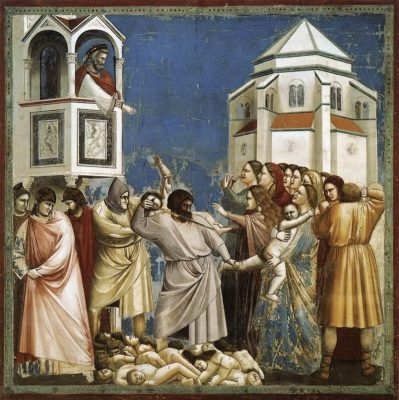
Giotto di Bondone · The massacre of the innocents
1304 – 1306 – Fresco on wall – Scrovegni Chapel, Padua
“Credette Cimabue nella pittura / Tener lo campo, ed ora ha Giotto il grido/ sì, che la fama di colui oscura (Once Cimabue thought to hold the field as a painter; Giotto now is all the rage, dimming the lustre of the other’s fame)”
Dante, Divine Comedy
In his “Lives of the artists”, Vasari mentioned the following story: in a quiet day, Florentine painter Cimabue was walking in the countryside, when he observed with surprise a young shepherd -just a very young boy- painting ewes on a rock with a white chalk. The realism of the figures amazed Cimabue. When the master asked the boy his name, the boy said: “My name is Giotto, and my father is called Bondone”
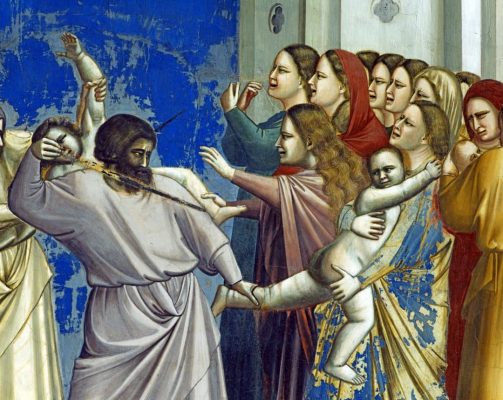
This story is probably untrue, but it is useful as an introduction to the Art of Giotto di Bondone (1266-1337), the man who revolutionized Western Art to the point that many critics consider him -not without reason- the first genius of European painting, praised by his contemporaries Dante, Petrarca, and Boccaccio. The idea of Art as an expression of human feelings appears for the first time with works like this, clearly opposed to the hieratic Byzantine style. It is enough with observing the heartbreaking faces of the mothers watching the inevitable death of their children to understand this idea. Giotto was an extremely innovative artist, unsurpassed until the appearance of Fra Angelico and the primitive Flemish masters of the early 15th century.
Text by G. Fernández, theartwolf.com
Follow us on: